FAQ - Thameslink Programme

Thameslink FAQs

General


New trains


Blackfriars


Barbican & Moorgate


City Thameslink


Farringdon


London Bridge


Wimbledon Loop


East Coast Mainline


Cross-London Services


Great Northern route


Kentish Town, Cricklewood and Hendon


General

How can I keep up to date with what's happening?

Check this website regularly and stay up to date with the Thameslink Programme developments by signing up to receive the latest news by email.

Back to top
What is the Thameslink Programme?

Good question. It’s a government-funded £6bn programme of work to introduce new and improved stations, new track, new cross-London routes and new longer and more frequent trains with the express purpose of reducing overcrowding. It will transform the Thameslink route.

Back to top
Who’s involved?

Network Rail is building new track, new stations, has extended platforms and improved signalling. First Capital Connect will bring in a new fleet of trains and run the train service, parts of which are now jointly run with train operator Southeastern.

Back to top
What’s in it for me?

A more comfortable ride! That’s thanks to more space on more frequent, longer, brand new trains running to and through London from better stations across an extended rail network. There are already almost 5,000 more rush hour seats thanks to 92 new carriages (that's 23 four-carriage trains) introduced in 2009 and new direct connections from Kent and south London to St Pancras International and beyond. Blackfriars and Farringdon stations will be upgraded significantly in time for the Olympics and London Bridge will be rebuilt by December 2018. Check out the new destinations that may be on offer from December 2018.

Back to top
When's it happening?

22 March 2009 - completed!

· Preparatory work finished ready for stations at Farringdon and Blackfriars to be redesigned/redeveloped.

· Moorgate branch closed.

· New timetable in place offering new direct destinations from north Thameslink route stations to Kent and south east London
· Double the number of trains (up to 15 per hour) arriving at Blackfriars and City Thameslink stations in the rush hour, matching that of St Pancras and Farringdon

· New fleet of 23 four-carriage Electrostars (delivery completed January 2010)


December 2011 - completed!

· Farringdon, Blackfriars and most stations on the Thameslink route main line capable of taking 50% longer, 12-carriage trains.


From December 2018:

· London Bridge station redeveloped

· New fleet of trains

· Up to 24 trains per hour at peak times through central London

· An expanded network

Back to top
Will trains be more frequent?

There’ll be many more trains per hour and more destinations to choose from on trains across the heart of London. The main goal is to reduce overcrowding.

Back to top
What impact will this have on my day?

Let’s be honest: while we think you’ll like the end result, the work might well disrupt your journey in the short- term. First Capital Connect is working closely with Network Rail to keep aggravation to a minimum and doing our level best to keep you updated with what’s going on. We’ll also offer advice on the best way around bottlenecks and station works – a job made much easier if you sign up to our email alerts.

On top of this, we worked with Network Rail to maintain and in some cases improve train services before the main work began, by making changes to the network.

Network Rail invested £40million in Thameslink route infrastructure to ensure it would be reliable enough for us to deliver the service our customers expect and deserve during the delivery of the Programme. This included:

  • Investing in spare switch and crossing parts to reduce the time it takes to replace these components when they fail.
  • Improving overhead lines in the Bedford area to reduce delays resulting from overhead line problems.
  • Reducing the length of the electric section in the West Hampstead area to give more flexibility of where trains can turn around if there are problems with the overhead lines in the area.
  • Putting in a turnback at Herne Hill to allow trains to turn around and go back in the direction they have come from. This is very useful in times of disruption and has been installed following a request by FCC.
  • Investing in additional resources to better manage incidents when disruption occurs in the core section between St Pancras International and Blackfriars.
Back to top
How is the £6bn being spent?

The £6bn will be spent on new track, new stations, longer platforms, better signalling and new trains. A significant portion will be spent on track improvement work, as well as redesigning Farringdon and redeveloping Blackfriars and London Bridge stations.

Back to top
But what are you doing to relieve overcrowding today?!

It's true that the biggest improvements won't happen until the new fleet of trains arrives from 2015 and the new high-frequency service is introduced, in 2018.

However, First Capital Connect is painfully aware how much you hate packed trains so is doing its level best to do something about overcrowding right now. There's real progress too.

Believe it or not this was accomplished with the timetable of December 2009 in which all but 12 rush hour trains were scheduled to run at the maximum eight carriages in length. This figure is now just 11 four-carriage trains per day in the rush hour.

Finding more of the existing trains

It's tough finding more carriages. The problem is they have to be 'dual voltage' to run on the two different types of Thameslink route power supplies, north and south of London. The 23-year-old Class 319 carriages that run on the Thameslink route today obviously have this feature and First Capital Connect has successfully acquired every one of them in existence.

Sourcing new air-conditioned Electrostars

To make up the shortfall, and provide enough trains to operate the new timetable into south-east London and Kent that was introduced in March 2009, First Capital Connect took delivery of a further 23 new four-carriage trains (that's 92 new carriages), known as Class 377/5 Electrostars. These air-conditioned trains which are used widely in the south-east have a smoother ride, with CCTV and panels showing information about your route.

These trains are running on the main Bedford to Brighton route and in the peaks between Bedford and Ashford, Rochester, Gillingham and Bearsted (operated jointly with Southeastern).

That gives you longer trains right now!

There were, in January 2009, 25 rush hour trains four carriages in length. Now (2012) there are timetabled to be just 11 services that are four carriages long - three in the morning peak and eight in the evening.

The new Electrostar trains have helped create (approximately) almost 3,400 extra seats in the rush hour - some 970 more in the morning and 2,430 more in the evening. Together with extra changes made in the December 2009 timetable, there are a total of almost 5,000 extra rush hour seats on the Thameslink route since before the March 2009 timetable change.

Furthermore, the frequency of trains arriving at Blackfriars and City Thameslink stations has risen from 7-8 trains per hour to up to 15 trains per hour in the rush hour, matching that of St Pancras and Farringdon.

Back to top
Where else will I be able to travel?

Since 22 March 2009, there are now direct connections from north Thameslink route stations to Kent and south east London. By the end of 2018 the Great Northern route will be linked in. The final route map has yet to be finalised but check out the new destinations that may be on offer.

Back to top
Do you have more station staff?

From Monday to Friday, First Capital Connect stations within central London now have more Customer Information staff available on the platforms to help you.

Back to top
Will the Thameslink Programme be paid for by big fare increases?

No - there will not be any direct link between the investment in new trains and infrastructure and the fares charged to customers on the route. The investment is being funded by the Department for Transport.

Back to top
Will the longer trains mean FCC will lift its policy of restricting passengers with off-peak tickets returning home in the peak (evening period restrictions)?

First Capital Connect has committed to monitor passenger numbers on trains as additional carriages are introduced and review the policy accordingly.

Back to top
Crikey! That tone's a bit flippant, isn't it?

The Thameslink Programme is extremely important and one of the biggest rail projects in the UK for a number of years. It will impact different people in different ways.

From the beginning it was recognised that clear communication would be key to the success of the project - passengers have to understand what is happening, and in some cases need to plan ahead and make alternative travel plans.

Many options were examined for how to communicate with customers. The winning solution was a unique style aimed at grabbing people's attention. It is direct, totally honest, accessible and straight talking.

The full campaign, from the tone of the language to the design of the multicoloured stripes, was tested with a number of customer groups. The feedback was very positive but there was a small percentage of people who did not like the approach. Research will be carried out continuously to monitor people's views and the effectiveness of the campaign.

Back to top
When will the Thameslink Programme be completed?

The Department for Transport remains committed to investing £6bn to modernise one of Britain's busiest rail routes to deliver a dramatic increase in capacity, with longer trains running up to 24 times an hour through central London, meaning more seats and improved reliability for passengers.

After further detailed planning, Network Rail has revised the infrastructure work planned at London Bridge for a solution that improves access through the station, reduces disruption to passengers during the construction phase and provides a better value for money solution. As such the Thameslink Programme outputs will be delivered from 2018.

Back to top

New trains

Will there be new trains?

Yes! New trains have already been delivered.

Now in service

A new fleet of 23 air-conditioned Class 377/5 Electrostar trains (that's 92 carriages) are in service right now. They have a smoother ride, with CCTV and panels showing information about your route.
They are running on the main Bedford to Brighton route, fast between St Albans and St Pancras, and in the rush hour between Bedford and Ashford, Rochester, Gillingham and Bearsted (operated jointly with Southeastern). However, because late night and early morning services between Bedford / London / Three Bridges / Brighton call at all stations between St Albans and St Pancras (including places like Cricklewood, Radlett, Mill Hill etc) there are a few trains formed of Class 377 carriages which call at Radlett, Elstree, Mill Hill, Hendon, Cricklewood, West Hampstead and Kentish Town.

377 with new livery

One of the new Thameslink route Electrostars

First Capital Connect has also brought in more of the existing 319 trains boosting the size of the fleet and reducing overcrowding.

All this means that all but 11 of the Thameslink route rush hour services are the maximum eight carriages in length.

December 2011

From December 2011, the first 12-carriage services began to operate on the Bedford to Brighton Thameslink route.

This is limited to eight services a day because of the number of trains available. First Capital Connect has been loaned three extra Electrostar four-carriage train units by Southern and has targeted the very busiest services with these.

2015-2018

And brand new eight and 12-carriage trains are being designed and built too - these will be next-generation trains, entering service between 2015 and 2018 on both the Thameslink and Great Northern routes operated by First Capital Connect.

They will have the effect of significantly increasing capacity - and they'll be more frequent through central London. In fact, from the end of 2018 there will be trains every 2-3 minutes running into and out of central London on the Thameslink route.

Train in station

Siemens has been appointed preferred bidder for the new trains

See a 'fly-through' of the new trains.

On 27 November 2008, the Department for Transport released the information needed by manufacturers hoping to design and build the Thameslink Programme’s brand new eight and 12-carriage trains.

On 16 June 2011, Siemens was appointed preferred bidder to design, finance, build and maintain the new fleet of around 1,200 carriages. The first new trains are scheduled to enter service between 2015 and December 2018, from when the full benefits of the programme, including 24 trains per hour across the capital, will be delivered.

Siemens has supplied detailed proposals for trains that can carry many more people and, at the same time, ensure those people can get on and off quickly enough to allow up to 24 trains per hour through central London by the end of 2018 – that’s a service every two to three minutes.

It’s making a mainline train run at metro-style intervals!

Features specified include:

  • Longer trains with greater capacity
  • More spacious interiors and wide open connections between carriages
  • Lighter, energy-efficient vehicles that cause less wear to the track
  • Greater reliability
  • Faster acceleration and braking
  • Advances in safety and reliability built in
  • Intelligent use of new technology:
    • Passenger information systems fed with real-time travel information to update passengers on their connections and to guide overseas visitors arriving through the airports and Eurostar services
    • Passenger loading information transmitted to central London platforms to advise people where to stand so they can board the train where there is most space
    • Air-conditioning that automatically adjusts according to the number of people in each carriage
  • Features for passengers with luggage and people of restricted mobility

The specification has been informed by research with Thameslink route passengers and special interest groups, carried out on behalf of the independent national rail watchdog Passenger Focus in a joint project with London TravelWatch. There’ll be more consultation as the project develops.

Back to top
Will trains be longer?

Most stations are now capable of taking 50% longer 12-carriage trains. The first eight peak hour services (four in the morning and four in the evening) have been formed of existing Electrostar units hired from Southern.

More 12-carriage services will be introduced with the arrival of the first of the new Thameslink train fleet, in 2015. The full 12-carriage timetable will be in operation by the end of 2018.

Back to top
Where are the new trains for 2015-18 coming from?

Siemens has won the competition to design, finance, build and maintain the fleet of up to 1,200 new carriages and is now preferred bidder (you can see the Government news release here).

Back to top
Are you building new depots for the trains?

The new generation of crowd-cutting 12-carriage trains will be maintained at new depots. Plans for base schemes at two sites have been published. One is a new depot south of London, near Three Bridges station. The other is close to Hornsey depot in north London. You can find out more about this here and learn about the revised plans for a new depot at Three Bridges here.

Back to top
Why do you need to buy completely new trains, and what will happen to the old ones?

The high frequency of the new service through central London (up to 24 trains per hour in each direction) means the trains have to accelerate quickly and be capable of safely enabling high volumes of passengers to board and alight in a short time at each central London station.

There are insufficient electric trains of the right type within the national fleet to deliver this and the rest of the Thameslink Programme’s objectives.

Some of the existing trains that will be replaced could be used for electrification schemes in the North West and Great Western routes.

Back to top

Blackfriars

What’s happening at Blackfriars?

Blackfriars is now capable of taking longer, 12-carriage trains and, and in 2012, the full brand new station will be complete. There’ll be a brand new station spanning the Thames (the first ever) and we already have a South Bank entrance handy for Tate Modern and other places south of the river, and easier access to a much better Tube station. Read 'It's all change at Blackfriars' for more information.


Back to top
When does the South Bank entrance open at Blackfriars station?

The South Bank entrance opened at Blackfriars on 5 December 2011.

Back to top

Barbican & Moorgate

Why did you have to close the branch line to Barbican and Moorgate Thameslink?

The Moorgate Thameslink route branch line had to close on 22 March 2009 so that a new timetable could be brought in that allowed Network Rail to close the three terminating 'bay' platforms at Blackfriars in order to start rebuilding the station to take longer 12-carriage trains.


This timetable provides a new cross-London service by joining up the north Thameslink route services which previously went into Moorgate with those Southeastern services from Kent which had been terminating in those Blackfriars 'bay' platforms and effectively needed somewhere to go - they could not just be withdrawn from service.


The branch line to Moorgate also had to close for Network Rail to extend the Farringdon station platforms later in 2009. The longer platforms will let First Capital Connect use longer 12-carriage trains instead of eight on the mainline from December 2011, which will reduce overcrowding.


Unfortunately the platforms can’t be lengthened very far northwards because the track drops down a gradient. The only option is to extend southwards which will take the platforms across the junction for Moorgate, cutting off the branch line from the mainline for good.


There is a good interchange with London Underground services to Barbican and Moorgate at Farringdon but the station is likely to be very congested and you could be delayed here. View other suggested alternative travel arrangements.


First Capital Connect Great Northern route services are unaffected and will continue to call at Moorgate.

Back to top
What compensation will you give me now Thameslink route trains have stopped serving Barbican and Moorgate?

It has been a Government requirement that passengers using the Tube to get to Barbican or Moorgate from Bedford and stations north of London on the First Capital Connect Thameslink route won't have to pay any more than they usually would had they been able to catch the Thameslink route train. The Government is funding the Tube element of the journey for 24 months after the Moorgate Thameslink route branch closure. This means tickets will not be sold with validity beyond the 24-month period (March 2011). As a result, First Capital Connect stopped selling annual season tickets to Barbican and Moorgate on 21 March 2010. Shorter length season tickets are available up to March 2011 at the usual discounted rates for such lengths of time.

Customers can walk from Farringdon ( 8 minutes to Barbican, 18 minutes to Moorgate at a medium pace), or cycle (a new bicycle rack has been installed at City Thameslink in Pilgrim Street).

There are also buses that run from St Pancras International and City Thameslink. See our alternative travel page.

Find out more about why the Moorgate branch had to close.

Back to top

City Thameslink

What's going on at City Thameslink?

Looking after City

City Thameslink has been upgraded as part of the programme to increase capacity and reduce overcrowding on the busy Thameslink route.

The station is more secure, brighter and – crucially – ready to accommodate 50% longer 12-carriage trains as they enter service from December 2011.

All this work was done out of hours or during existing overnight and weekend track closures so there wasn't any further impact on services.

And the detail?

Platforms

Work on an extra 15-20 metres at the northern ends has brought the full length of the platforms into use ready for 12 carriage trains. The floors and walls have new surfaces and lighting and passenger information systems have been installed.

Better info and security

Good information is really essential when you’re on the move. So City Thameslink has new customer information displays throughout the station, with four instead of two on each platform and a new, clearer public address system and new passenger help points.

The closed-circuit television cameras has also been replaced and there is an upgraded fire safety system.

The entire system can be controlled from a newly-equipped control room ensuring passengers are given the best possible information, help and advice.

Brighter feel

There are brighter, more energy-efficient lights to further improve the feeling of safety at the station as well as cut carbon emissions.

More seats

All six benches have been replaced to make them compliant with the latest disability regulations and another four have been installed, providing over 20 more seats.

Lifts

The two lifts on each platform at the Ludgate Hill end had already been renewed. The upgrade added audible announcements for the visually impaired, CCTV cameras and a help point.

Ticket barrier

At the Ludgate Hill end there is an extra gate to make it easier for more people to come in and out.

Powered up

As part of the project, overhead power lines have been extended from neighbouring Farringdon station to City Thameslink. This, coupled with a section of rail that allows trains to switch from one track to another, now lets First Capital Connect turn southbound trains at City Thameslink if there’s a problem up ahead on the line. It also gives FCC the flexibility to operate new timetable patterns.

You can also read this news release

Back to top

Farringdon

What’s happening at Farringdon?

Farringdon station is being remodelled: find out more.

Back to top

London Bridge

What’s the plan for London Bridge station?

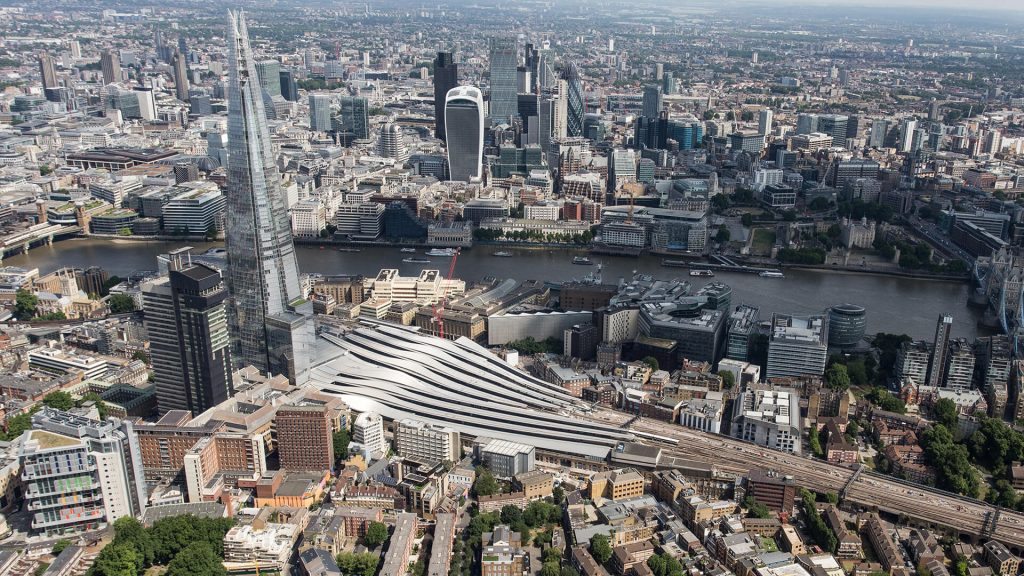
Network Rail is redeveloping London Bridge in phases after the Olympics. There will be changes to the way the track is laid out as well to reduce the bottlenecks that plague the area. By the time work is completed, from December 2018, the new station will have space for two-thirds more passengers.

The station won't have to close during this work but plans suggest First Capital Connect services will not be able to call there in 2015 to make space for building works which require a number of platforms to be taken out of use. Instead they would be diverted via Herne Hill. We'll keep you updated!

Back to top

Wimbledon Loop

Why won’t we get 12-carriage trains on the Wimbledon loop and the stations up to and including Elephant & Castle?

Extra room has been brought in during the rush hour on the Wimbledon loop through extra services. However, we can’t run 12-carriage trains; it’s just too expensive and in many cases it is not possible to lengthen the platforms. For example, at Tulse Hill there are complex sections of track at each end of the station and a large bridge which cannot be moved.

Selective door opening technology wouldn't work either with so many stations in a row with short platforms: if we ran 12-carriage services around the loop, it would take people so long to get on and off from the part of the train overhanging the platform (as services are very busy in the rush hour), trains could never run to time and teh timetable would fail.

Back to top
I have read that trains from the Wimbledon Loop are going to terminate at Blackfriars station in 2018. Is that true?

It is anticipated that the new Thameslink trains will be introduced onto all of the FCC Thameslink routes from 2015 alongside the existing rolling stock. However the final Thameslink train service specification has yet to be agreed, and this will be determined as part of the re-franchising process for Thameslink services.

The Department for Transport has announced a consultation on a review of franchise policy, and this will inform the Government's decisions on how rail services are specified in the future, with a view to improving outcomes for passengers and facilitating private sector investment in the railways.

Why is there a proposal that suggests terminating Wimbledon Loop trains at Blackfriars?

Basically, it is a measure designed to simplify train movements, keeping trains from crossing one another's paths, helping to reduce delay and improve reliability. It would also help to achieve the target of up to 24 trains per hour from Blackfriars through central London to St Pancras and beyond.

Thirty-two trains per peak hour are currently planned to approach Blackfriars from the south when the Thameslink Programme is complete, from December 2018. In total, 24 trains per hour will go through to St Pancras and beyond, and eight per hour will terminate in new bay platforms on the western side of the layout at Blackfriars.

The view of the team that compiled the South London Route Route Utilisation Strategy, a view also adopted in the London and South East Route Utilisation Strategy, was that the success of the 24 trains per hour operation will depend upon a very high level of operating performance. To give it the best chance of success, train paths should therefore cross one another as little as possible - because if one train is held up it will affect another.

This suggests the best arrangement is therefore for the 18 trains per hour from London Bridge that approach on the eastern side of the tracks into Blackfriars, and the six that come from the Denmark Hill direction ''up the middle'' should be the 24 trains per hour to go through to St Pancras and beyond, while the eight trains per hour that approach from Herne Hill on the western side (which includes the Wimbledon Loop trains) should be the ones to terminate in the bay platforms.

Back to top

East Coast Mainline

Why hasn’t the East Coast mainline been joined to the Thameslink route when a tunnel to link the two was finished in 2005?

The simple reason is that London Bridge station won’t be able to cope with the extra trains from the East Coast mainline until it has been rebuilt and its track upgraded, by the end of 2018. This is when the routes will be linked.

Back to top

Cross-London Services

Will I be able to get to central London at weekends?

Yes, you can still get into London easily on First Capital Connect trains but to get across the city you’ll need to use the Tube. See suggested alternative travel arrangements.

Back to top
What work is being carried out that necessitates these closures?

You might be wondering why the route across central London has to close every night and most weekends until 18 May 2012.

A large part of the work Network Rail is carrying out during these closures relates to station work at Farringdon, City Thameslink and Blackfriars.

But there’s a lot to be done to the track, signalling and power infrastructure in the tunnels and sub-surface section of the route in central London in readiness for the 12-carriage trains and future high-frequency services planned.

Power: The AC overhead line equipment has to be reconfigured and the power supply boosted for the increased service for 24 trains per hour and 12-carriage trains. For the southern third rail DC section and signalling systems, a new substation has been built at Ludgate Cellars, near Blackfriars – the largest of its type in the country. To power the AC overhead section to the north and the signalling systems, a new substation has been built at Elstree & Borehamwood.

Signalling: The system across central London – between Kentish Town and London Bridge/Loughborough Junction – changes entirely. Signals are being installed closer together, as they are on a metro system, instead of approximately every 1km, which will later in the programme allow trains to safely travel closer together, increasing capacity (see ‘New control system’ below).

New crossovers have already been built to give First Capital Connect the flexibility of running trains into either of the two Thameslink platforms at St Pancras International, regardless of their direction of travel.

And in December 2011, changes were made to allow First Capital Connect to operate the first 12-carriage trains.

By the time of the May timetable change in 2012, there will be bi-directional signalling from Kentish Town to Blackfriars and the terminating bay platforms at Blackfriars will be ready to be brought into use.

New control system: The work being carried out during the overnight and weekend closures of the Thameslink route in central London will lay the foundations for a European Train Control System (ETCS) to be overlaid on the existing signalling system.

ETCS will provide the platform for automatic train operation (ATO). The new trains will use ATO when London Bridge and its associated infrastructure work is completed in 2018, allowing the frequency across central London to be increased to up to 24 trains per hour in each direction.

Back to top

Great Northern route

Will Thameslink route trains operate to King's Lynn?

The design of the new Thameslink trains offered by both companies vying to build and maintain them currently precludes them serving stations from Cambridge to King's Lynn.

This is primarily because the power supply on the route to King's Lynn is not capable of supporting the longer Thameslink trains, and many of the platforms on this route would be too short for the new Thameslink trains.

However the number of direct through services between King’s Lynn and King’s Cross will be similar to that which passengers enjoy today.

Back to top
What about relieving crowding on today's Cambridge and Peterborough routes?

Making more space on the Cambridge and Peterborough routes

The Government's High Level Output Specification scheme gave us 5,500 extra seats in May 2009 and has another 6,500 in the December 2010 timetable through extra trains, power upgrades and longer platforms.

The Thameslink Programme will add still further capacity as new trains are added to this route which, in December 2018, will be linked through to the Thameslink route at St Pancras International to create new direct cross-London journeys to places such as Gatwick Airport from destinations such as Peterborough and Cambridge.

Back to top

Kentish Town, Cricklewood and Hendon

Why aren't Kentish Town, Cricklewood and Hendon platforms being extended?

Once 12 carriage trains start calling at Elstree, Radlett and Mill Hill in 2018, capacity will be released on those trains calling at Kentish Town, Cricklewood and Hendon.

Platforms cannot be extended at Kentish Town because of road bridges at each end which cannot be moved. The platforms at Cricklewood are not being extended because there is insufficient demand to warrant 12-carriage trains calling there. There is also a bridge over a road at the south end and complex track work at the other. Additionally, a new station is being built at Brent Cross as part of a £4.5 billion regeneration scheme and this will be able to take 12-carriage trains.

Brighton to Bedford trains rarely call at Kentish Town and Cricklewood other than in the late evening or early morning. Instead they are served by the Wimbledon loop trains that will remain a maximum eight carriages in length due to the road bridge at Tulse Hill and complex track layouts near other station platforms. The proposal would be that from 2018 Kentish Town and Cricklewood would be served by the proposed St Albans to Sevenoaks or Orpington service. Therefore there will not be a reduction in service for these two stations.

The platforms at Hendon are not being extended because there is insufficient demand to warrant 12-carriage trains calling there.

Back to top

Live running info

Live departure board

Alternative travel arrangements Alternative travel arrangements

Suggested routes to help you on your journey.

Subscribe to travel alertsSubscribe to email updates
Stay up-to-date with the Thameslink Programme developments by signing up to receive the latest news by email.

AccessibilityAccessibility
How will the Thameslink Programme affect access to and from stations?